Development Roast Giving international development a proper roasting
 La Paz is one of the slowest growing cities in Bolivia, in terms of population. Every year, twice as many people move away from the city than move into it from other regions (1). Between 1992 and 2001, the city’s population grew a modest 11%, compared to the 60% growth of El Alto and Santa Cruz de la Sierra, and the 40% growth of the total urban population (see Table 1).
|
Table 1: Growth of the 10 main cities in Bolivia |
||||||||||||||||||||||||||||||||||||||||||||||||||||
|
||||||||||||||||||||||||||||||||||||||||||||||||||||
| Source: INE, 1992 and 2001 census. |
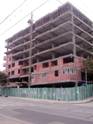
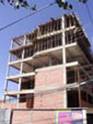
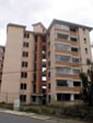
Despite the almost stagnant population, and the uncertainty concerning the future location of the government city, there is a huge building boom taking place in La Paz at the moment. Skyscrapers are popping up like mushrooms, and the exceptional demand for construction workers has doubled the daily wage rate compared to 2 years ago. Demand for cement in the department of La Paz increased by 17% between 2006 and 2007, whereas in all of Bolivia it increased only by 10% (2). More than twice as many building permits are issued in La Paz than in Santa Cruz de la Sierra (3), despite the fact that every time La Paz increases its population by 100 people, Santa Cruz de la Sierra adds 550. There are also twice as many construction companies in La Paz than in Santa Cruz (4).
This is strange. If I had money to invest, I would be reluctant to invest in real estate in a stagnant city. Simple economic laws suggest that when supply increases under conditions of constant demand, then prices (property values and rent) are going to fall. There is a real risk of ending up with empty apartments and offices once the economic boom ends, or even just slows down a bit.
But there is of course an explanation to this seemingly irrational building boom, and it was explained to me by one of the faithful readers of this newsletter. The explanation can be found in the Bolivian tax system, which has declared the entire construction sector virtually tax-exempt. The sector does not pay value added tax nor profit tax. The workers are hired as day laborers, and thus pay no income taxes nor make any contributions to the social security system. The only tax the sector pays is the 3% transaction fee and the 0.5% municipal tax once the property is sold (and cheating on both is common). In contrast, the formal manufacturing and commerce sector pays 67-80% of value added in tax, depending on the source (5).
On top of that, there is the “Dutch Disease” explanation, which predicts that a natural resource boom, such as Bolivia is experiencing now, will favor the non-tradable sectors (especially construction) at the expense of the tradable sectors (manufacturing) due to the currency appreciation.
These two factors together easily explain why there are many more formal enterprises engaged in construction and real estate than in manufacturing in Bolivia. According to the System of Enterprise Statistics, launched by the Superentendencia de Empresas last week, 35% of all formal enterprises in Bolivia are engaged in construction and real estate, 23% in commerce, and only 15% in manufacturing. More than 2/3 of all the municipal Enterprise Registrations (Tarjetas Empresariales) extended since 2003 are given to the construction sector.
|
|
|
|
|
|
|
|
|
|
|
|
|
|
|


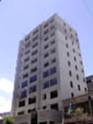
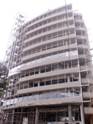
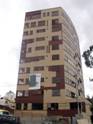
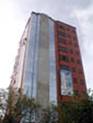

As a private person on the renting side of the market, I think all this construction looks like very good news indeed. But as a development economist, I believe favoring the housing sector at the expense of the manufacturing sector is an unfortunate development strategy. There is not much we can do about the natural resource boom, but there is no excuse for maintaining a tax system that only worsens the situation.
Unless tax incentives are soon changed, the current natural resource boom will be turned into mountains of cement, rather than the productive, competitive enterprises we will need once the natural resource boom ends.
Is La Paz growing unnecessarily? Leave your reply below.
(*) Director, Institute for Advanced Development Studies, La Paz, Bolivia. The author happily receives comments at the following e-mail: landersen@inesad.edu.bo.
(1) According to information from INE based on the 2001 census.
(2) According to the Sociedad Boliviana de Cemento (SOBOCE), www.soboce.com .
(3) In 2006, there were issued 358,000 construction permits in Santa Cruz and 783,201 in La Paz (www.ine.gob.bo) .
(4) According to FUNDEMPRESA‘s records of formal businesses in Bolivia (www.superempresas.gov.bo) .
(5) According to the World Development Indicators of the World Bank, the effective tax rate for formal enterprises is 80%. But tax evasion is widespread in Bolivia, and according to the admittedly outdated 1997 social accounting matrix, the effective tax rate for the formal sector is “only” 67%.