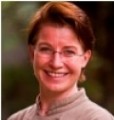
Lykke E. Andersen

Highlights from the 3rd Bolivian Conference on Development Economics (BCDE 2011)

The Third Bolivian Conference on Development Economics was held at the Catholic University of Bolivia in La Paz last month with approximately 170 participants and 50 presenters, including keynote speakers Santiago Levy from IADB and James Robinson from Harvard.

The principalorganizers were the Institute for Advanced Development Studies (INESAD), the Society of Bolivian Economists (SEBOL), the Catholic University of Bolivia (UCB) and the Bolivian Academy of Economic Sciences (BCDE), receiving financial support from Corporación Andina de Fomento (CAF), the Danish Embassy in La Paz, the Inter-American Development Bank (IADB), Sociedad Boliviana de Cemento (SOBOCE), Fundación Estás Vivo, Banco Sol, the International Development Research Centre (IDRC), the Korean International Cooperation Agency (KOICA), Instituto de Investigaciones Socioeconómicas (IISEC), Banco Nacional de Bolivia and Boliviana de Aviación (BOA).

Read More »

Development from within

INESAD’s new book “Development from within” is a compilation of the Monday Morning Development Newsletters written by Lykke E. Andersen over the last 5 years. The foreword is written by Juan Antonio Morales, and the reactions of four pre-viewers are copied below.

The book will be presented later this month in La Paz. Readers in the rest of the world can request a copy by sending an e-mail to the address given below.

Read More »

Never give up!


“I’m a great believer in luck, and I find the harder I work, the more I have of it”
 Thomas Jefferson

“It’s not that I’m so smart, it’s just that I stay with problems longer”
Albert Einstein

Between the determinism of religion and the randomness of everyday life, anybody should be able to find an excuse for taking it easy, going with the flow, and relax on a Sunday afternoon. Indeed, our lives are to a large extent determined by random events (or God’s unpredictable will), and effort may seem pointless, especially if the odds are discouraging.  

Read More »

Would REDD work in Bolivia?

In Bolivia, agricultural land generates on average three times as much GDP per hectare as standing forest (1), which is one of the reasons why the Bolivian government largely ignores the quarter million hectares of illegal deforestation that occurs every year.

However, forests provide many valuable functions that are not currently included in GDP (e.g. habitat for thousands of plant and animal species; carbon storage to protect against climate change; water capture, storage and cleansing for a cleaner and more stable water flow; recreational and aesthetic values; etc.). As long as all these benefits are not taken into account, natural forests stand little chance against other land uses.

Read More »

Ecosystem Disservices and Poverty


By: Lykke E. Andersen*

“Why is it that a child’s death amounts to a tragedy, but the death of millions is merely a statistic?” Patrick McDonald.

Human beings depend heavily on ecosystem services for their survival and well-being. Basic needs like drinking water, fresh air, food and construction materials are to a large extent provided to us by nature, as are more luxury services like spectacular views for expensive homes and eco-tourism activities.

However, many of the problems that ail humanity also come from nature and might be thought of as ecosystem disservices: Approximately 2 billion people are infected with the hepatitis B virus, making it the most common infectious disease in the world today. Close to a billion persons are infected with tuberculosis, which causes nearly 2 million deaths every year. Several hundred million people suffer from malaria and almost a million children die from it every year. About 50 million cases of dengue fever appear each year, and countless millions suffer horribly from other infectious and parasitic diseases, such as African trypanosomiasis (“sleeping sickness”), cryptosporidiosis, leishmaniasis, onchocerciasis (“river blindness”) and schistosomiasis.

In addition, the crops and livestock on which we depend for food are frequently assaulted by insects, fungi, viruses, weeds, bacteria and predators. Rainfall, which is great in the right amounts at the right time, can also cause huge disasters, if it arrives in the wrong amounts or at the wrong time.

Read More »

Is Bolivia’s development model sustainable? Insights from Bolivia’s Green National Accounts

Bolivia’s current development model relies heavily on non-renewable natural resource extraction (especially natural gas and minerals) and the mining of nutrients from newly deforested soils for agriculture. This kind of activities clearly cannot be sustained forever. However, if the depleted natural capital is converted into other types of productive capital, it is still possible to leave future generations better off, in the sense of having more productive capacity. The maintenance of total productive capacity is the minimum requirement for weak sustainability.

Is Bolivia converting its natural capital into other types of productive capital? Or is it merely consuming its natural capital, leaving future generations with fewer options?

Read More »

Natural resource rents and taxes: Insights from Bolivia’s Green National Accounts

Green National Accounting (1) corrects one of the flaws in conventional national accounting, which is ignoring the important role of nature as a source of inputs into production processes.

In some sectors these environmental inputs are very important (e.g. forestry, farming and fishing), while in other sectors they play a minimal role (e.g. banking, commerce and education). In each sector they interact with the two other conventional production factors, labor and capital, to produce the total GDP for the sector, but the proportions are different for each sector (see Figure 1 for the sectors with a significant environmental component):


Read More »

Highlights from the 2nd Bolivian Conference on Development Economics (BCDE 2010)

The Second Bolivian Conference on Development Economics (BCDE 2010) was held in La Paz last week with approximately 150 participants and 55 presenters, including keynote speakers Máximo Torero from IFPRI and Beatriz Armendáriz from Harvard.

The principal organizers were the Institute for Advanced Development Studies (INESAD, the Society of Bolivian Economists (SEBOL) and Universidad Privada Boliviana (UPB), with crucial support from Kiel Institute for the World Economy. Many other institutions and individuals contributed to the success, including several generous sponsors (the Danish Development Research Network, the Poverty Reduction, Equity, and Growth Network, BancoSol, SOBOCE and Fundación Estás Vivo)and of course the many talented presenters who had made the long trip to Bolivia from every corner of the World.

Read More »

Microfinance and development: Do the math

“Money often costs too much.”
Ralph Waldo Emerson –

The development community has for years been heralding microcredit as a means to escape poverty, but some very simple math suggests that we need to be cautious about pushing it too much.

To do this simple math, let’s compare the life-stories of two fictional boys who are both born poor. Let’s call them Micky and Savvy. Both work part time from age 10 earning 1 dollar per day, but they live at home with their parents, who provide for their basic needs. Micky spends his hard earned 7 dollars every week-end with his friends, while Savvy saves them and manages to invest his modest funds at an average real rate of return of 10% per year (mostly by lending money to needy friends and relatives).

Read More »

Follow

Get every new post delivered to your Inbox

Join other followers: