November 30, 2012
Climate Change, Conservation, Ecocide, Environmental Degradation, Indigenous Peoples, Natural Resources, Solutions, Sustainability
 Today there are 8 billion human beings, speaking around 7000 different languages, sharing the Earth with 8 millions different species of plants and animals. This is the amazing diversity of life on our planet, which is sadly under threat from deeds of large-scale environmental damage. Some are calling these ‘acts of ecocide’ and fighting for them to be punishable by international criminal law.
The word ‘ecocide’ is derived from the Greek oikos (dwelling place, habitation) and the Latin -cida (one who kills). A legal definition, proposed by international barrister Polly Higgins in her campaign Eradicating Ecocide is “the extensive damage to, destruction of or loss of ecosystem(s) of a given territory, whether by human agency or by other causes, to such an extent that peaceful enjoyment by the inhabitants of that territory has been or will be severely diminished.” Read More »
November 24, 2012
Environmental Economics, Macroeconomics, Mining, Monetary, Oil and Gas, Policy, Solutions, Sustainability

“I’m not in this race to slow the rise of the oceans or to heal the planet.” Republican Presidential Candidate Governor Mitt Romney, an interview on “Meet the Press”, September, 2012.
This month, Development Roast has published several posts offering insights into different principles and practices of green accounting. After our overview of European experience with environmental accounting, we now turn to North America. Excluding Mexico (which will be discussed next week in the Latin America update), the two remaining countries show us quite different experiences with greening the national accounts. While Canada has shown to be an example of comprehensive implementation, the United States suspended its national project for environmental accounting in 1995 and hasn’t made large attempts to develop these accounts since. Read More »
November 12, 2012
Climate Change, Conservation, Ecosystem Services, Environmental Degradation, Environmental Economics, Environmental Education, Infographics, Natural Resources, Policy, Sustainability
 To coincide with INESAD’s November Environmental Sustainability month, today’s Monday Graphics series is making a case for the worth of stable ecosystems.
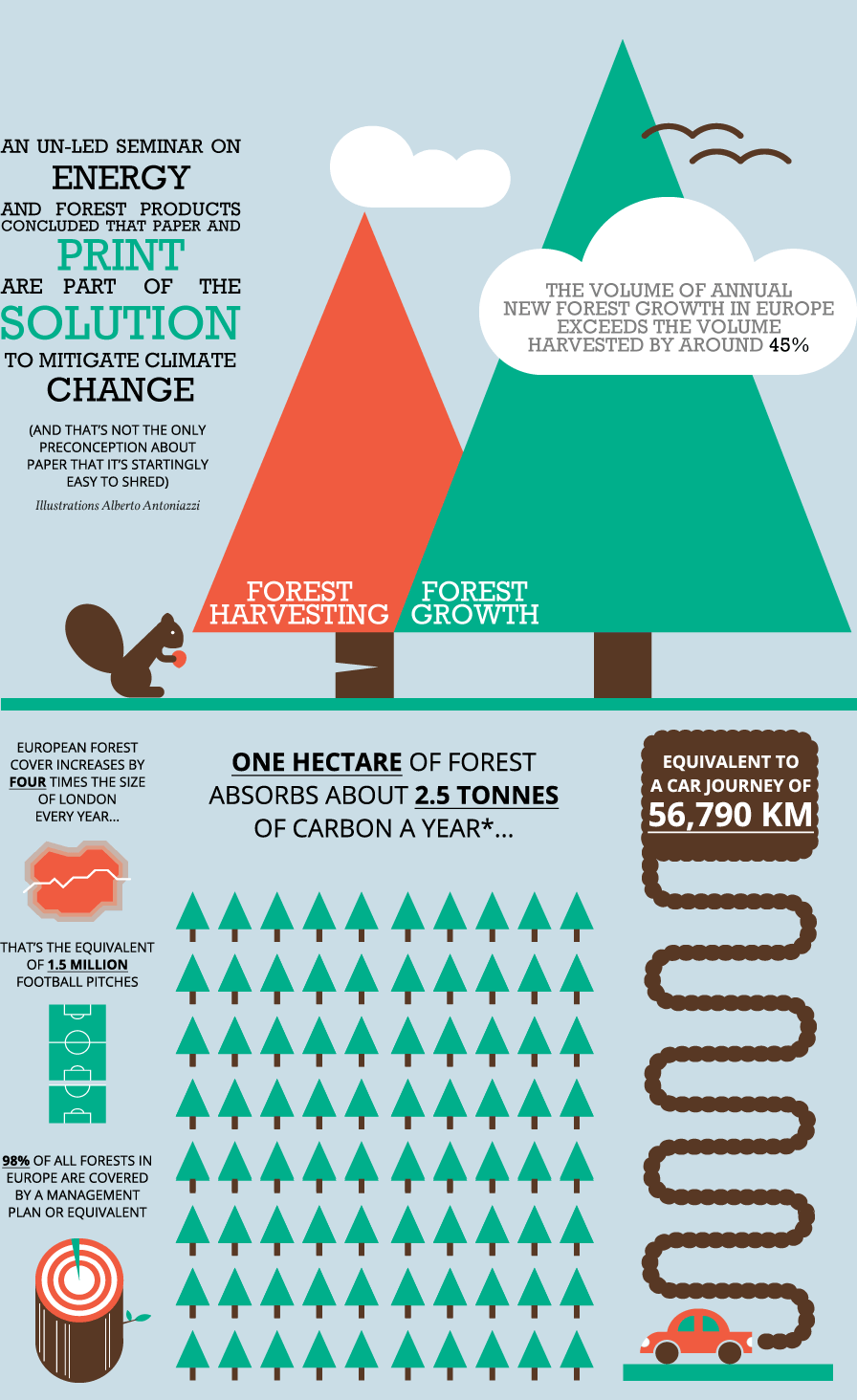
Assessing Forest Growth and Air Quality.
The first infographic based on a UN Seminar on Energy for Sustainable Development conducted in 2011, despite the increase in Europe’s paper production over the past 20 years, forest growth has exceeded the harvest of forest goods by 45 percent. This translates to an increase in air quality as un-harvested forests provide valuable ecosystem services such as carbon capture. Read More »
November 2, 2012
Capitalism, Climate Change, Conservation, Consumerism, Development, Ecosystem Services, Environmental Degradation, Environmental Economics, Macroeconomics, Mining, Monetary, Natural Resources, Policy, Solutions, Statistics, Sustainability

“When the last tree is cut down, the last fish eaten, and the last stream poisoned, you will realize that you cannot eat money,” Native American saying
“Sustainable development is development that meets the needs of the present without compromising the ability of future generations to meet their own needs,” Brundtland Report
It is undeniable that our current way of life is unsustainable; If every country consumed resources and created waste at the same per person rate as the United States, we would need three to five planets to survive. Part of the problem lies in the fact that economics—the major discipline advising global and national policy—has failed to include the environment in its calculations. To rectify this problem, different methods have been proposed, so as to make predictions and come up with better ways of managing the planet’s resources without compromising the future.
Read More »
September 10, 2012
Environmental Economics, Infographics
 There is a lot of talk about carbon accounting, carbon footprints and future sustainability, but these things are hard to imagine on a day-to-day level. Fortunately, many organizations are trying to make this topic easier to digest by coming up with ingenious inforgraphics to illustrate the point. Two in particular are helping people see their own country’s carbon footprint in five different ways. Read More »
 Development Roast Giving international development a proper roasting