 Development Roast Giving international development a proper roasting
 Agriculture has one of the highest potentials for reducing carbon emissions and helping vulnerable people adapt to climate change. As it stands, industrial agriculture that uses toxic chemical inputs of fertilizer and pesticides for growing highly destructive monocultures and antibiotics for animals that are fed unnatural foods in terribly confined conditions is taking a huge toll on the planet. Agriculture is one of the world’s biggest causes of deforestation and, thus, loss of biodiversity and vastly increased rate of species extinction; currently species are disappearing at 50-500 times faster than background fossil record rates. If we continue at current rates, another 10bn ha of natural ecosystems would be converted to agriculture by 2050. This type of land use change is the single most largest contributor to emissions in developing countries, making agriculture responsible for 18 percent of all GHG emissions in the world (74 percent of which are in Developing Countries) – which is larger than the whole of the transport sector. Intensive farming practices have added to soil degradation so much so that 17 percent of Earth´s vegetated land in now classified as degraded. In addition, agriculture consumed 90 percent of global freshwater during the last century and because renewable freshwater stocks are very low, demand from the projected additional 2.3bn people by 2050 will need to be met from existing irrigated land. This is particularly a problem since 64 percent of the world´s population is projected to live in water-stressed areas by 2025. While additional pressures on agriculture are coming from new projects such as carbon sequestration and the rising global demand for biofuel crops. Read More »
Cartoon Economics: “We are all dead in the long run”
 This month, for our Monday graphics series, Development Roast has teamed up with FSG Books and University of Washington Professor of Economics, the world’s first and only stand-up economist, Yoram Bauman to bring you a sneak peek into the second volume of his book The Cartoon Introduction to Economics. Learning should be fun, so for five weeks during October, to coincide with INESAD’s Fun Economics Month, Development Roast will share one of the fascinating and fun cartoons from Volume Two: Macroeconomics. Today’s cartoon asks: What’s more important, short- or long-term growth and stability? Read More »
Graphics: How Much Water Do You Eat?

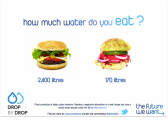 Meat production is thirsty business. Do you know much water do you eat? INESAD’s latest inforgraphic provides some real food for thought. Did you know, for example that a beef burger takes 2,400 litres of water to produce, compared to 170 litres for a vegetarian burger.
Find out more at www.unwater.org and www.waterfootprint.org. Read More »
Graphics: Cows, Showers and Burgers—Encouraging Diet-Based Water Conservation
 Did you know that passing up just one beef burger saves the water equivalent of 40 low flow showers? INESAD’s latest infographic aims to encourage diet-based water conservation. Love it, live it, share it.
Find out more at www.unwater.org and www.waterfootprint.org. Read More »
Graphics: Dropping The Burger Water Bomb
 March 22nd saw this year’s World Water Day kick off a series of upcoming events organised by the UN and other organisations to highlight global water issues.
Luckily, there is lots of good news, like the fact that half of the internationally agreedMillennium Development Goal on safe drinking water and sanitation has been met ahead of schedule. According to a joint report by the World Health Organisation and UNICEF:
“Since 1990, more than 2 billion people have gained access to improved drinking water sources.” Read More »
Graphics: The Power of Education—An Alternative Evolution of Man
 A picture can say a thousand words. An infographic can say them better.
Today, Development Roast brings you visual food for thought by proposing an alternative evolution of man and the role that education can play within it (click on the image to expand).
Please share the infographic with your friends and colleagues. Read More »