 Development Roast Giving international development a proper roasting

There are some policies that are obviously correct from both environmental and economic viewpoints, but which are nevertheless difficult to implement. The elimination of fossil fuel subsidies is such an example. This year, the Bolivian government expects to spend at least US$750 million on direct subsidies to diesel (62%), gasoline (27%) and Liquefied Petroleum Gas (LPG) (10%) use (1). Apart from dramatically reducing funds available for public investment, these subsidies also encourage contamination, congestion and deforestation (2), all of which mean substantially higher social costs than the direct costs of the subsidy itself. The beneficiaries of the subsidy are dominated by the agro-industry in Santa Cruz, which profits greatly from the combination of cheap diesel and cheap land. Thus, the subsidy is by no means pro-poor, and a lot of the benefits are even lost to neighboring countries, as their nationals rent cheap land and use subsidized fuel for growing crops in Bolivia. For example, more than 70% of the area dedicated to soy production over the last decade is in the hands of foreigners (3). The Bolivian government realizes all this and has tried, unsuccessfully, to eliminate the fuel subsidy.
 One of the hardest things to do for anyone interested in issues of environmental sustainability is to translate ideas and complaints into practical, positive, change-making action. For those who try to teach the next generation of environmental and social leaders in schools, in communities, or even online, this is even more important—merely talking about problems is likely to inspire only the students’ depression and frustration at lack of solutions. Luckily, Ecoliterate, a new book by psychologist Daniel Goleman and Lisa Bennett and Zenobia Barlow of the Center of Ecoliteracy—an organization that supports and advances education for sustainable living—is a deep well of ideas for those seeking inspiration.
 By Grahame Russel

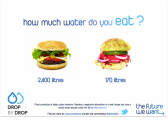 Meat production is thirsty business. Do you know much water do you eat? INESAD’s latest inforgraphic provides some real food for thought. Did you know, for example that a beef burger takes 2,400 litres of water to produce, compared to 170 litres for a vegetarian burger.
 Did you know that passing up just one beef burger saves the water equivalent of 40 low flow showers? INESAD’s latest infographic aims to encourage diet-based water conservation. Love it, live it, share it.