 Development Roast Giving international development a proper roasting
 What exactly leads to development is a topic of great debate in academic and practical circles. Proposed cures for underdevelopment vary from providing infrastructure to enacting large-scale macro-economic reforms. Yet, often, there is little conclusive evidence of many solutions’ consistently marked effects on different countries’ economic prosperity or social and environmental cohesion. One factor that does stand out, which is frequently promoted in reports by the likes of the World Bank, United Nations (UN), the OECD, ActionaAid and even Forbes Magazine as the key to achieving all Millennium Development Goals, is investment in the health, education and equality of women.
Graphics: How Corporations Get Out of Paying Taxes

Everyone knows that corporations dodge taxes. If a regulation loop hole exists, they are likely to try and exploit it, inventing a new practice, tool or mechanism for the purpose, with a new, jargon-laden name that gives it an air of legitimacy. Whereas much past evasion of taxes would happen in the corporation’s own country, with the rapid globalization of businesses over the last few decades it now spreads across nations and continents. For example, a huge relatively new field of transfer pricing has mushroomed within the financial accounting realm, with whole teams, even departments, charged with it. What does it mean? In the most basic terms, a parent company sells or trades to its own subsidiary in a different country some goods, services or labor, often at an obscenely low or high price, in order to move income or expenditure of their balance sheet around to make them fit into lower tax brackets and less regulated jurisdictions. In essence, it transfers the price somewhere else that reduces its tax liability, hence the name transfer pricing. All of this is done “for tax purposes,” with tax professionals involved engaging in what they call “tax planning,” evidenced by the fact that transfer pricing is often and increasingly an offshoot of tax departments in companies and accounting firms. Translated, it means legal tax dodging. Read this useful summary by the Tax Justice Network for a closer look.
This is of course but just one example and understanding what fully occurs behind closed doors can be clouded by the terminology. Today, Development Roast brings you an infographic published by The Online MBA that attempts to explain exactly How Corporations Get Out of Paying Taxes in more visual terms. Read More »
Graphics: Why agriculture needs to be greener
 Agriculture has one of the highest potentials for reducing carbon emissions and helping vulnerable people adapt to climate change. As it stands, industrial agriculture that uses toxic chemical inputs of fertilizer and pesticides for growing highly destructive monocultures and antibiotics for animals that are fed unnatural foods in terribly confined conditions is taking a huge toll on the planet. Agriculture is one of the world’s biggest causes of deforestation and, thus, loss of biodiversity and vastly increased rate of species extinction; currently species are disappearing at 50-500 times faster than background fossil record rates. If we continue at current rates, another 10bn ha of natural ecosystems would be converted to agriculture by 2050. This type of land use change is the single most largest contributor to emissions in developing countries, making agriculture responsible for 18 percent of all GHG emissions in the world (74 percent of which are in Developing Countries) – which is larger than the whole of the transport sector. Intensive farming practices have added to soil degradation so much so that 17 percent of Earth´s vegetated land in now classified as degraded. In addition, agriculture consumed 90 percent of global freshwater during the last century and because renewable freshwater stocks are very low, demand from the projected additional 2.3bn people by 2050 will need to be met from existing irrigated land. This is particularly a problem since 64 percent of the world´s population is projected to live in water-stressed areas by 2025. While additional pressures on agriculture are coming from new projects such as carbon sequestration and the rising global demand for biofuel crops. Read More »
Graphics: Sustainability and Businesses – How Reliable are Corporate Social Responsibility reports?
 As part of INESAD’s November Environmental Sustainability month, today’s Monday Graphics series is investigating sustainability in businesses.
This Global Sustainability Scorecard was compiled by McDonalds about its business’s sustainability. Many companies produce graphics like these to make consumers aware of their efforts to protect or contribute to the environment and society (for other big name examples, see the graphics put together by Apple and H&M). While analyzing these, consumers should keep the overall picture in mind: is going green in your office really a mark of sustainability? Are promises that businesses make about one area of their production chain, such as McDonald’s does here about fishing, neglecting their unsustainable habits in other areas? Industrial beef production, for instance, remains a huge problem and causes diseases and deforestation, and McDonald’s happens to be one of its main proponents. Are the businesses really helping the environment, or are they only making their impact ‘less bad’? Read our recently published article on the topic ‘How ‘sustainable’ is sustainable development in the corporate world?’ Read More »
Graphics: Pollution and Innovation—How Sustainable is Latin America?
 To coincide with INESAD’s November Environmental Sustainability month, today’s Monday Graphics series is investigating pollution and sustainable innovations in Latin America.
The first infographic, entitled Pollution in Latin America, was compiled by Hispanically Speaking News using reports from the Economist Intelligence Unit, Yale and Columbia University, the World Health Organization (WHO), the World Bank and the Pan American Health Organization (PAHO), to show how pollution is affecting Latin America. In addition to illustrating the health hazards of pollution, such as the two million deaths a year attributed to it, countries like Nicaragua and Costa Rica are exemplified as countries heading towards environmental improvement. In fact, along with ranking fifth globally for its positive treatment of the environment, Costa Rica ranks first in a recent Happy Planet Index released by the New Economics Foundation, which measures how happy people are in relation to their ecological footprint. Read More »
Graphics: Exactly why should we protect ecosystems?
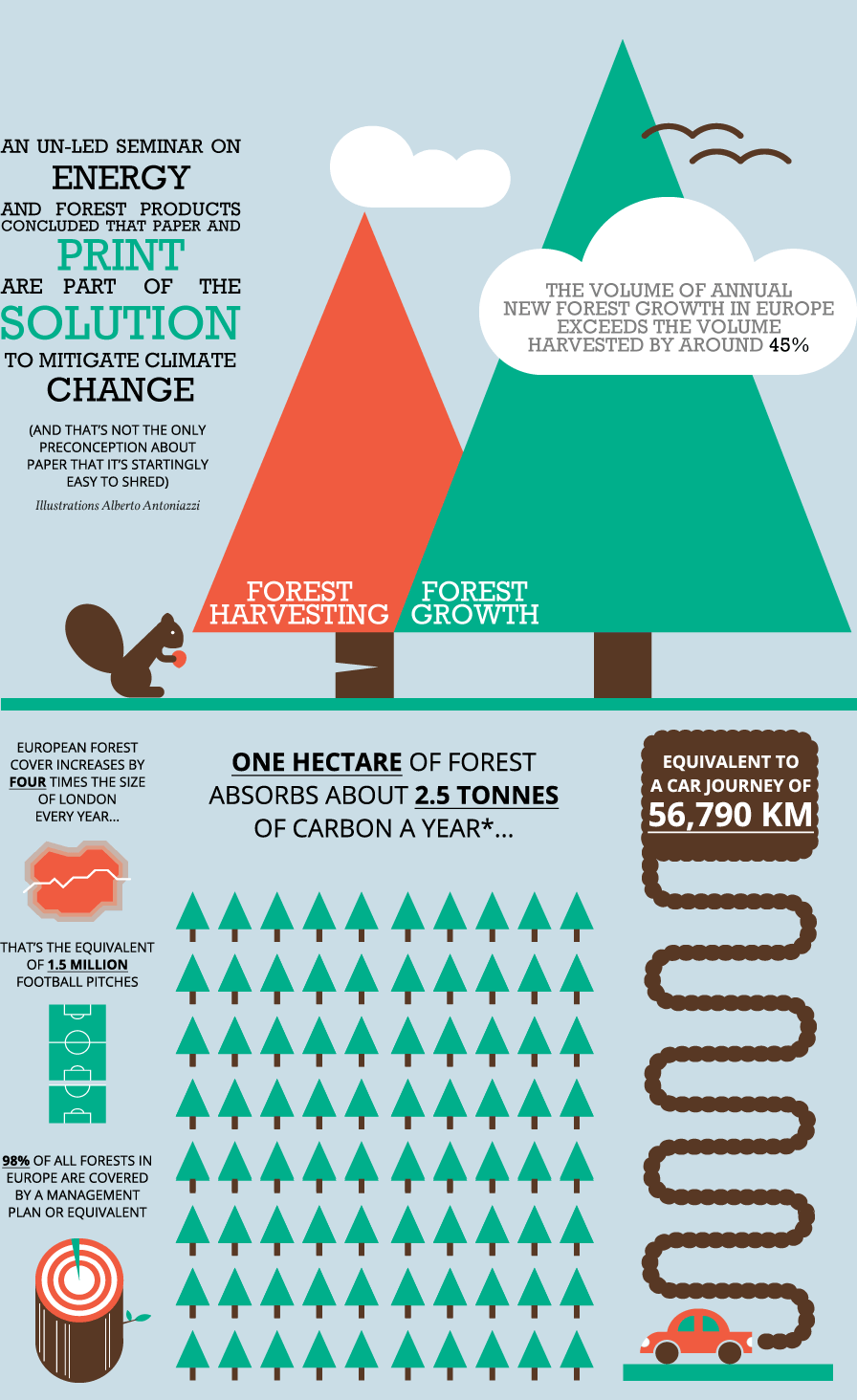 To coincide with INESAD’s November Environmental Sustainability month, today’s Monday Graphics series is making a case for the worth of stable ecosystems.
Assessing Forest Growth and Air Quality.
The first infographic based on a UN Seminar on Energy for Sustainable Development conducted in 2011, despite the increase in Europe’s paper production over the past 20 years, forest growth has exceeded the harvest of forest goods by 45 percent. This translates to an increase in air quality as un-harvested forests provide valuable ecosystem services such as carbon capture. Read More »
Graphics: Global Warming – The Evidence
 Over the next four weeks, to coincide with INESAD’s Environmental Sustainability Month, Development Roast will release fascinating and informative infographic every Monday. To kick off the month, we bring you those depicting one of the most pressing environmental issues to date, global warming.
Cartoon Economics: Macroeconomic theories are still just that – Theories.
 This month, for our Monday graphics series, Development Roast has teamed up with FSG Books and University of Washington Professor of Economics, the world’s first and only stand-up economist, Yoram Bauman to bring you a sneak peek into the second volume of his book The Cartoon Introduction to Economics. Learning should be fun, so for five weeks during October, to coincide with INESAD’s Fun Economics Month, Development Roast will share one of the fascinating and fun cartoons from Volume Two: Macroeconomics. Today’s cartoon reminds that much of macroeconomic theory is still open to debate and probable future change.
 Read More »
Cartoon Economics: Will the world end or will the free market save it?
This month, for our Monday graphics series, Development Roast has teamed up with FSG Books and University of Washington Professor of Economics, the world’s first and only stand-up economist, Yoram Bauman to bring you a sneak peek into the second volume of his book The Cartoon Introduction to Economics. Learning should be fun, so for five weeks during October, to coincide with INESAD’s Fun Economics Month, Development Roast will share one of the fascinating and fun cartoons from Volume Two: Macroeconomics. Today’s cartoon pitches the economic optimists versus the pessimists in the ultimate fate of the planet. Read More »
Cartoon Economics: How to save the world
 This month, for our Monday graphics series, Development Roast has teamed up with FSG Books and University of Washington Professor of Economics, the world’s first and only stand-up economist, Yoram Bauman to bring you a sneak peek into his book The Cartoon Introduction to Economics. Learning should be fun, so for five weeks during October, to coincide with INESAD’s Fun Economics Month, Development Roast will share one of the fascinating and fun cartoons from Volume Two: Macroeconomics. Today’s cartoon shows how humility is the first rule in saving the world. Read More »