Policy

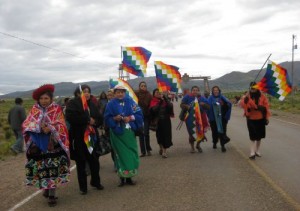
Morales Orders USAID Out of Bolivia

The United States Agency for International Development (USAID) was today ordered to leave Bolivia. According to the British Broadcasting Association (BBC), President Evo Morales accused the agency of ‘seeking to “conspire against” the Bolivian people and his government.’

USAID has been working in the country for over fifty years and has a current spending budget of around US$50 million. Here is some of the media features of the story and its analysis:

En Español:

El Universo: Bolivia Expulsa a la USAID

AVN: Presidente de Bolivia expulsa a la USAID de su país Read More »

Guest Roast: Good Governance and Development – Which causes which?

By Edvin Arnby Machata

The international development community has for almost two decades focused on improving governance as a strategic priority for aiding economic growth. This article points to the historical record and argues that 1) growth does not require good governance, 2) good governance and representative institutions are products of economic development – not the other way around, and that 3) the configuration of national institutions determine whether a political order will produce developmental outcomes or not.

‘Good governance’ has been a mainstay component in most donor-funded development programmes during the last two decades. What exactly constitutes good governance is empirically problematic, but while implementations vary, demands for good governance generally include provisions to minimize graft and increase respect for human rights.

Read More »

Bolivia’s Best: Interview with Prize-Winning Physicist Oscar Saavedra

“When you’re young, it’s important to have a vision that you try to fulfill in spite of whatever difficulties you may have to overcome.”

This is the philosophy of Oscar Saavedra, a highly respected particle physicist from Bolivia, now a Professor at the University of Turin in Italy. He studies cosmic rays (particles that come from outer space) and a type of particle called the neutrino, topics which help us to deepen our understanding of the physical universe.

It seems strange to some that people choose to spend time and money studying fundamental science as Oscar does, especially people from developing countries where even the most basic needs of many people are not met. What is the point in thinking about the structure of the universe when sufficient food, water, sanitation, and healthcare are not available?

Although it is true that this type of science has no direct use, there are many indirect benefits that arise from such work: cancer treatment and the World Wide Web are amongst the most incredible examples. Read More »

Last Chance to Apply to a Unique MA in Leadership for Sustainable Development

If you want to fast-track your career as a sustainability leader, join this unique, leading post-graduate program. The Master’s (MA) in Leadership for Sustainability was established 17 years ago by Forum for the Future, a sustainability non-profit that works globally with business, government and others to inspire new thinking and develop practical solutions. This MA is validated by Middlesex University, and includes access to all their facilities.

The MA is highly student-centered with small learning groups of 12 people or less and tuition from a diverse group of experts and practitioners, including leaders like environmentalist and writer Sir Jonathon Porritt and Professor of Sustainable Development at the University of Surrey and Director of RESOLVE Tim Jackson.

It also includes student placements at notable organizations in the public, private and citizen sectors working to further sustainability in their fields. Students in the 2012-13 cohort were placed at Islington CouncilCommittee on Climate Change, Good Energy, Friends of the Earth, Fairtrade Foundation, Marks and SpencerUnilever, and more. Read More »

INESAD News: Shopping for the human connection?

Today, the popular anthropology site PopAnth published an article by INESAD’s Ioulia Fenton in which she reflects on her time living and researching in Guatemala and the shopping experience that helped her feel more connected with food and the local people who produced and sold it.

Shopping for the human connection?

By Ioulia Fenton

In Guatemala I was addicted, truly addicted, to my morning regimen. No, it wasn’t a catch up to the day’s news on my iPad with a cup of coffee from Starbucks. Nor was it my favourite bowl of cereal or brand of orange juice. It wasn’t even a luxurious shower or a sleep-in. It was something much more sacred: a daily experience that allowed me to indulge in what makes us human — connections with others. Read More »

Guest Roast: Bad news? Sick and disabled people in British media

By Dr. Kayleigh Garthwaite

For the past three years, I have been studying the lives of long-term sickness benefits recipients in North East England, U.K. as part of my PhD research. In that time, government policy has increasingly distinguished between the ‘deserving’ and ‘undeserving’ in relation to sick and disabled people. Yet it is not only policy that makes that distinction.

In recent years, the media have taken a more vitriolic stance towards sick and disabled people, often branding them deeply offensive terms such as ‘scum’, ‘feckless’, and ‘work-shy’ (Garthwaite 2011). A comparable discourse is evident not only in political debates and the mass media, but also when considering public opinion. Polls show unsurprising support for welfare reform plans, signalling the public’s negative view towards benefits and people who receive them. For example, an IPSOS Mori poll carried out for the BBC published in October 2011 revealed that although a resounding 92 percent of British people wanted a benefits system providing a safety net for all, 63 percent doubted the U.K. benefits system works effectively, 72 percent wanted politicians to do more to cut the benefits bill, and 84 percent wanted to see stricter testing for sickness benefits. Read More »

8 Organizations Making a Difference to Bolivia’s Women.

By Ioulia Fenton and Tracey Li.

Every year, March 8 is a date reserved for honoring the fairer sex around the world. To celebrate some of the best the world has to offer, Development Roast brings you 8 organizations that are making a difference to the lives of Bolivia’s women. Happy international women’s day!

FIMI & MADRE Building Political Participation:

Bolivia’s Indigenous Female Parliamentarians. Photo Credit: MADRE

International Indigenous Women’s Forum (IIWF), which is best known by its Spanish name and acronym Foro Internacional de Mujeres Indígenas (FIMI), was founded in 2000. It is a network of indigenous women from all over the world that partners with another global women’s organization, MADRE, to increase the role of women in international decision making, improve women’s human rights, and build political participation of women in Bolivia. Read More »

Migration Restrictions as a Barrier to Development

Living abroad is undoubtedly one of life’s most enjoyable, interesting, and eye-opening experiences. By stimulating economic growth and cultural exchange, it is also something that literally and figuratively enriches entire nations and the world as a whole. So, does placing restrictions on cross-border migration present a possible barrier to economic and human development?

My parents are originally from Hong Kong and emigrated to the U.K. during the 1960s, along with many thousands of other Hong Kong citizens. My mother arrived without knowing a word of English yet was welcomed warmly by the medical training school that she attended. She stayed in the U.K., working as a nurse for nearly 40 years, while others chose to return to Hong Kong, taking back with them the education, training and experience that they had acquired abroad.

Following in my parents’ international footsteps, for the past couple of years I have lived and worked in Spain. Aside from some logistical and social obstacles – such as finding a new house, making new friends, and learning a new language – the process of emigrating and starting a job there was pretty simple. For many people, however, emigrating abroad, permanently or temporarily, is much more difficult as many countries have strict immigration constraints against the inflow of citizens of certain nations.

The extent of this problem is illustrated by the results of a survey conducted by the Organization for Economic Co-Operation and Development (OECD) and the French Agency for Development (AFD), who collected data from 146 countries between 2008 and 2010. They found that roughly 630 million adults, around 14 percent of all adults in the world, said that they would like to move to another country permanently if they had the opportunity. Findings from the Gallup World Poll also revealed that around 1.2 million people wanted to migrate temporarily for work purposes. However, only ten percent of the people who said they would like to migrate were actually planning to do so in the following year. Clearly, there is something preventing the other 90 percent from pursuing their dream of migrating. Read More »

Biofuels – A Good Way to Fight Climate Change?

The Earth’s climate is changing and the vast majority of the scientific community as well as the public is now convinced that human activity is contributing significantly to this phenomenon. The underlying cause is an increase in the concentration of ‘greenhouse gases’ in the Earth’s atmosphere, such as carbon dioxide, which is released when fossil fuels are burnt; nitrous oxide from chemical fertilizers; and methane which is produced from activities like rice farming and livestock production. These gases trap heat in the atmosphere, leading to the ‘greenhouse effect’ – a rise in the average global temperature which leads to melting ice-caps and therefore rising sea-levels. Additionally, the change in the atmosphere makes the climate more unpredictable, increasing the incidence of ‘freak’ weather events such as hurricanes, floods and droughts (‘global weirding’). Regardless of what is causing the climate to change, preparations need to be made to cope with the consequences as they will impact on many aspects of life. One of these will be the world’s food supplies and food prices, since agricultural growing conditions will change in certain places, affecting the type and quantity of crops that can be grown. This in turn will affect people’s ability to buy and otherwise access food.

However, right now, the biggest impact of climate change on food supplies and food access does not come directly from the changes in climate. Instead, it comes from one of the ways in which we are trying to stop climate change: biofuels. ‘Undercovering Undernutrition Part II‘ showed that the growing demand for biofuels (mainly from western countries) means that in some areas biofuel crops are being grown preferentially over food crops due to their profitability. A 2010 report by the Institute for European Environmental Policy (IEEP) reported that European countries have chosen to meet the European Union (EU) legal requirement of including 10 percent of renewable energy in all transport fuels by 2020 by importing biofuels from places such as Indonesia, Brazil, and some African countries. One of the results, reported by The Guardian newspaper, is that the land acquired over the past decade for growing biofuel crops could have produced food for a billion people. This has led to increased food prices, leading to more people being unable to afford food and therefore going hungry. Read More »

Bolivia’s Best: An Interview With Oscar Saavedra Arteaga

Fifty five years ago, archaeologist, engineer and geologist Kenneth Lee discovered the ruins of an ancient civilization in the region of El Beni, in the northeast of Bolivia. The sophisticated technologies that were revealed by the excavated remains fascinated the academic community. One man in particular has spent the past several years developing an ancient agricultural system of camellones, used by this civilization, for modern use. This is a system that uses elevated fields, channels of water and aquaponics (cultivating plants and fish in the same water source) to protect crops from flooding, whilst fertilizing these in a natural way and increasing productivity compared to traditional industrial farming methods. The model has proved so successful in El Beni that the non-governmental organization (NGO) Oxfam has applied it in many African countries.

Today, to kick off Development Roast’s brand new ‘Bolivia’s Best’ interview series, we meet Oscar Saavedra, a Bolivian agroecologist and one of the founders of the Kenneth Lee Foundation who directs the camellones initiative under his own NGO, Amazonia Sostenible (Sustainable Amazonia) as well as his own business, Amazonia Services. Read More »

Follow

Get every new post delivered to your Inbox

Join other followers: